CONTACT
  • Login
Upgrade
SINwebzine
Advertisement
  • Home
    • Our Authors
    • Media Kit
    • Contact
    • Cookie Policy
    • Terms and Conditions
  • Artificial Intelligence
  • Software
  • WordPress
  • Web Infrastructure
  • Marketing
  • Business
  • Security
  • Home
    • Our Authors
    • Media Kit
    • Contact
    • Cookie Policy
    • Terms and Conditions
  • Artificial Intelligence
  • Software
  • WordPress
  • Web Infrastructure
  • Marketing
  • Business
  • Security
No Result
View All Result
SINwebzine
No Result
View All Result
Home Business

Revenue goals for the final quarter

10/09/2026
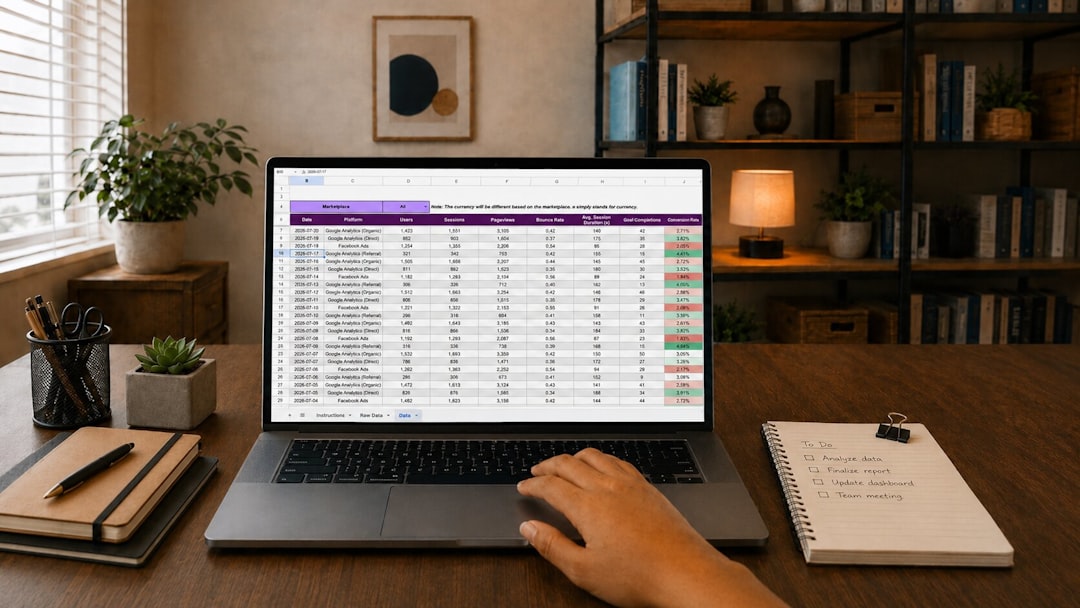
Small business owner reviewing revenue goals on a laptop spreadsheet

Every October, business owners write down revenue goals that owe more to hope than to history. As the final stretch of the year approaches, small businesses everywhere are gearing up for the 4th quarter, a pivotal period marked by holiday sales and year-end financial assessments that can make or break a business’s annual performance. I ran a content agency for six years, and I remember the exact feeling of typing a number I wanted rather than one I could defend. This piece is about the second kind: numbers built from your own arithmetic, not from wishful thinking.

Why revenue goals fail in the final quarter

Q4 carries real weight for small operators, not just for public companies, and the quarter often decides how the whole year reads on paper. Analysts and investors alike pay close attention to Q4 results to evaluate trends, forecast future outcomes, and inform strategic decisions. However, most small operators do not have analysts watching. They have a bank balance and a hunch, which is a much shakier foundation for a target.

Many businesses view Q4 as the make-or-break phase, where they push to hit annual revenue goals, finalize contracts, and prepare for year-end audits. This framing sounds motivating, but it often produces the opposite effect. Therefore, a target set in January gets treated as fixed truth in October, even after three quarters of new information arrived. In fact, the goal usually deserves a rewrite, not a reread.

Sales team discussing quarterly revenue goals in a meeting

Building a forecast you can trust

A forecast is only useful if it reflects what your business actually does, not what a template assumes. Revenue forecasting is one of the most important tools a small business can use to plan ahead, and by predicting future income, you can make smarter decisions about hiring, investment, and cash flow. Still, the method you choose matters more than the software you buy to run it.

The straight-line method works well when growth is consistent and should correlate to the balance sheet for that quarter or period of time. For companies with more volatile growth or expenses, this method will not work. Meanwhile, seasonality and businesses with revenue that fluctuates throughout the year may use longer timelines or compare the same quarter year-over-year. Either way, the forecast should use your own numbers, not a shortcut built for someone else’s business.

Entrepreneur calculating a budget to reach revenue goals

Read also

  • Small business owner doing a pricing review of client invoicesPricing review before contract renewals04/10/2026
  • Freelancer reviewing a freelance retainer contract at a deskFreelance retainer structure that protects time20/09/2026
  • Two colleagues negotiating vendor contracts during an office meetVendor contracts: renegotiate them this fall02/09/2026
  • Freelancer calculating service pricing on a laptopService pricing: stop underselling yourself01/09/2026
  • IT administrator comparing password managers pricing on a laptopPassword managers for teams: real costs09/10/2026
  • Developer reviewing a feature flags dashboard before a releaseFeature flags: rolling back without redeploy07/10/2026

Pricing and budget moves that support revenue goals

A revenue goal without a spending plan behind it is just a wish. Good planning begins with budgeting and forecasting, and leaders review the company’s performance from the first three quarters, then adjust spending and targets for the final stretch. So the goal and the spending plan should move together, not sit in separate documents that nobody reconciles.

Pricing deserves the same scrutiny before you finalise a number. If a discount or bundle does not change unit economics enough to matter, it is marketing theatre, not a real growth lever. Additionally, a cash flow forecast helps you manage expenses and identify year-end tax deductions before shortfalls turn into emergencies. Finally, this is where budget decisions and pricing choices stop being separate conversations and start forming one plan.

Setting revenue goals your team can actually reach

A goal nobody believes in will not get chased very hard, no matter how it looks on a slide. Achievable goals should be challenging enough to motivate but still realistic given the team’s resources and historical data, since setting unattainable goals can lead to demotivation and frustration. So ambition without evidence behind it is just pressure with no plan attached.

Go beyond quotas by setting sales goals that are realistic yet challenging. Similarly, breaking the quarter into smaller weekly or monthly checkpoints makes drift visible early, long before December arrives. Then you can adjust the plan while there is still time to act on it, rather than explaining a miss in January.

Final thoughts on revenue goals

Realistic revenue goals do not come from optimism or from last year’s spreadsheet copied forward. They come from your own numbers, checked against a spending plan and a pricing structure that can actually deliver them. The final quarter rewards operators who adjust their revenue goals as new information arrives, not the ones who defend a number set months earlier. If your forecast looks shaky, rebuild it now while you still have weeks to act. Write the number down, show your work, and revisit it every few weeks until the books close.


Learn more about revenue goals

  • How to forecast revenue: Guide, tips, and methods
  • How to Set Sales Goals for Your Business
  • 15 SMART Sales Goals Examples: A Comprehensive Guide
Previous Post

Open weight models are catching closed APIs

Next Post

Hosting bill: how to spot hidden charges

Related Posts

Small business owner doing a pricing review of client invoices
Business

Pricing review before contract renewals

04/10/2026
Freelancer reviewing a freelance retainer contract at a desk
Business

Freelance retainer structure that protects time

20/09/2026
Two colleagues negotiating vendor contracts during an office meet
Business

Vendor contracts: renegotiate them this fall

02/09/2026
Freelancer calculating service pricing on a laptop
Business

Service pricing: stop underselling yourself

01/09/2026
Next Post
Small business owner checking a hosting bill on a laptop

Hosting bill: how to spot hidden charges

Leave a Reply Cancel reply

Your email address will not be published. Required fields are marked *

No Result
View All Result

Our Focus

STACKwebzine covers the technology that independent builders and publishers actually use: AI and automation, software and SaaS, WordPress, web infrastructure, marketing, business and security. Practical coverage of the working stack.

Our Readers

STACKwebzine is written for people who run something of their own: site owners, solo operators, small agencies, founders and publishers. Readers who make their own technical decisions and carry the cost of getting them wrong.

Our Approach

Reviews come from use rather than press releases. We explain what a tool does, what it costs at scale, what it replaces and where it breaks, and we say plainly when something popular is not worth the money.

Recent Post

  • Password managers for teams: real costs
  • Feature flags: rolling back without redeploy

© 2026 STACKwebzine by NOOR & NOOR — part of WEBZINE.world.

Welcome Back!

Login to your account below

Forgotten Password?

Retrieve your password

Please enter your username or email address to reset your password.

Log In
Manage Consent
To provide the best experiences, we use technologies like cookies to store and/or access device information. Consenting to these technologies will allow us to process data such as browsing behavior or unique IDs on this site. Not consenting or withdrawing consent, may adversely affect certain features and functions.
Functional Always active
The technical storage or access is strictly necessary for the legitimate purpose of enabling the use of a specific service explicitly requested by the subscriber or user, or for the sole purpose of carrying out the transmission of a communication over an electronic communications network.
Preferences
The technical storage or access is necessary for the legitimate purpose of storing preferences that are not requested by the subscriber or user.
Statistics
The technical storage or access that is used exclusively for statistical purposes. The technical storage or access that is used exclusively for anonymous statistical purposes. Without a subpoena, voluntary compliance on the part of your Internet Service Provider, or additional records from a third party, information stored or retrieved for this purpose alone cannot usually be used to identify you.
Marketing
The technical storage or access is required to create user profiles to send advertising, or to track the user on a website or across several websites for similar marketing purposes.
  • Manage options
  • Manage services
  • Manage {vendor_count} vendors
  • Read more about these purposes
View preferences
  • {title}
  • {title}
  • {title}
No Result
View All Result
  • Home
    • Our Authors
    • Media Kit
    • Contact
    • Cookie Policy
    • Terms and Conditions
  • Artificial Intelligence
  • Software
  • WordPress
  • Web Infrastructure
  • Marketing
  • Business
  • Security

© 2026 STACKwebzine by NOOR & NOOR — part of WEBZINE.world.

Are you sure want to unlock this post?
Unlock left : 0
Are you sure want to cancel subscription?
Verified by MonsterInsights
enEnglishfrFrançais